The Uniform Field
Neuroscience & Consciousness · Everyday Activation Cards
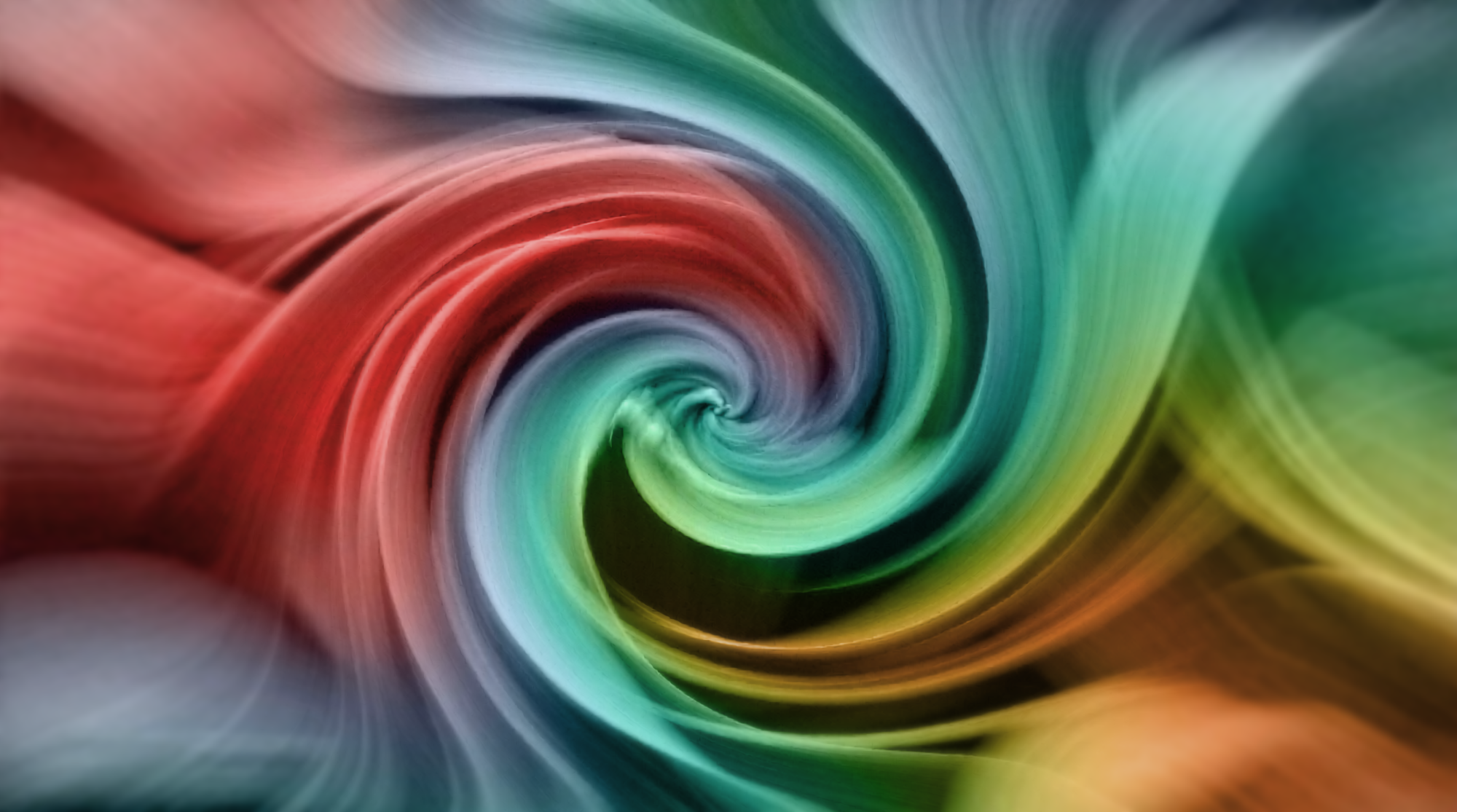
When the visual system stops resolving, something else begins
What happens to the mind when the eyes stop deciding — the perceptual science of immersive visual experience
In the late 1920s, a German psychologist named Wolfgang Metzger was studying the perceptual effects of fog. Specifically, he was interested in what happened to human perception when the visual field contained no edges, no objects, and no variation in depth — just an undifferentiated expanse of diffuse light. What he found surprised him, and has been surprising researchers ever since.
Subjects reported that the normal sense of visual space dissolved. The familiar experience of looking at a surface was replaced by something they struggled to describe: a sensation of being inside the light rather than facing it, of depth without distance, of presence without object. Some reported mild alterations in the sense of time. Some reported unusual clarity of internal imagery. Several found the experience difficult to describe in the vocabulary of ordinary visual perception, because the ordinary visual categories — near, far, surface, depth — had temporarily ceased to apply.
Metzger named the phenomenon the Ganzfeld — German for “whole field” — and the decades of research it initiated have quietly accumulated one of the more unusual bodies of evidence in perceptual psychology.
What the visual system does when it has nothing to do
Under normal conditions, the visual system is a prediction machine. The eyes constantly move — in rapid, involuntary saccades — scanning the environment for edges, contrasts, and changes that signal something worth attending to. The brain constructs its experience of the visual world not from passive reception but from active, continuous prediction and correction: anticipating what should be there, registering what differs from expectation, updating the model.
This process is extraordinarily efficient. It is also, in a specific sense, relentless. The visual system never fully rests during waking life. It is always checking.
THE RESEARCH
When the visual field is genuinely uniform — in a Ganzfeld condition, or in close approximation to one — something unexpected happens. Without edges to find or contrasts to register, the saccadic search movement slows dramatically. The prediction-and-correction cycle that normally dominates visual processing has nothing to predict and nothing to correct. The visual system, deprived of its usual function, enters what researchers describe as a state of perceptual depatterning.
And in that state, something shifts in the direction of attention. With the outward visual channel no longer demanding resources, the brain appears to redirect processing capacity inward. Internal imagery — hypnagogic-style visual experiences arising from within rather than arriving from without — becomes more vivid and more easily accessible. Subjects in full Ganzfeld conditions frequently report experiences that blur the boundary between perception and imagination: colours and forms that seem to arise from inside the visual field rather than outside it.
The Ganzfeld has been studied for its implications across an unusually wide range of fields — from parapsychology (controversially) to sensory deprivation research, sleep science, and, more recently, the neuroscience of psychedelic states, which produce some of the same perceptual characteristics through entirely different mechanisms. What the research converges on is this: when the visual system’s outward work is reduced, the brain’s inward generative capacity increases. The two are not separate systems. They share resources.
Why slowly shifting colour does something different
“A static image, however beautiful, is eventually resolved. The visual system checks it, files it, and returns to scanning. A slowly shifting image keeps the channel open — neither demanding full attention nor releasing it.”
Not a static image — which the visual system will efficiently process and set aside. Not a rapidly changing image — which will capture and hold attention in the way that video and screen content does, keeping the brain in alert, reactive mode. A slowly shifting, chromatically drifting visual field that is always slightly different from what the visual system expected, but never different enough to trigger the alerting response.
The effect is a kind of sustained, low-level perceptual engagement that sits precisely at the boundary of the Ganzfeld phenomenon without fully entering it: close enough to reduce the outward scanning demand on the visual system, open enough to keep the eyes gently present rather than closing entirely. The brain is neither processing a task nor released into sleep. It is, in the most productive sense, suspended.
The chromatic drift is not arbitrary. Research by photobiologist Alexander Wunsch and others on the autonomic nervous system’s response to colour temperature suggests that slow transitions from warmer to cooler colour fields — or cooler to warmer, depending on the activation’s intention — have measurable effects on physiological arousal. Warm colour fields are associated with reduced cortisol and a slight shift toward parasympathetic activation. The drift itself, separate from any fixed colour, engages the motion-sensitive areas of the visual cortex in a way that is processing-lite but attention-sustaining. The image breathes. The visual system breathes with it.
Slow chromatic drift engages the visual system at exactly the right level — present, but not working.
What this has to do with abstract art
The Ganzfeld research illuminates something about abstract expressionism that the neuroscience of pattern recognition alone does not fully account for. It is not just that abstract art keeps the brain searching because it cannot be decoded. It is that the best abstract expressionist work creates, within its edges, a kind of contained Ganzfeld effect — a visual field rich enough in texture and colour to hold the eyes, but unresolved enough that the search never terminates.
There is a related mechanism worth naming here, one that researchers studying binocular rivalry have documented with some precision. When a visual stimulus resists resolution — when the brain cannot settle on a stable interpretation of what it is looking at — attention enters a particular kind of suspension: not the restless scanning of unsatisfied search, but something closer to open hovering. The image is always almost-resolved. The looking continues not because there is nothing there, but because there is never quite enough to close the question. This suspended state, the research suggests, is associated with reduced self-referential processing — a quieting of the evaluative, comparing, narrating mind that ordinarily runs in the background of visual experience.
Abstract expressionist work — particularly work that originates in physical, textured, materially complex process — tends to produce this effect strongly. The surfaces are not flat. The colour does not sit still. There is always more to find, not because the image is complicated, but because it is genuinely open — it does not tell you what it is, so the looking continues. And as the Ganzfeld research suggests, the continuation of that looking, under the right conditions, is what allows the inward generative capacity to come forward.
The art does not illustrate the activation. It creates the perceptual conditions in which the activation can do its deepest work.
What happens at the edges
There is one more phenomenon worth noting, because it is one that anyone who has spent time in genuine stillness — visual or otherwise — will likely have noticed without having a name for it.
When the eye holds a point of focus for an extended period, the visual field does not remain uniform in its clarity. Unchanging stimuli at the periphery begin, slowly, to soften. To dissolve, even. The neural mechanisms responsible for visual processing are adaptation systems: they respond to change, and in the absence of change, they gradually reduce their firing. What is stable at the edges of the visual field becomes less present — not absent, but gently withdrawn, as though the world is leaning back while the centre holds.
The phenomenon has a name — the Troxler Effect, after the Swiss physician Ignaz Paul Vital Troxler, who described it in 1804 — and it is particularly pronounced for soft-edged, low-contrast, or subtly coloured stimuli. It is strongest during states of settled, absorbed attention: precisely the states that deliberate practice is designed to reach.
What makes this interesting, beyond the neuroscience, is the phenomenological quality it produces. The peripheral world receding while the centre remains clear is not an impairment. It is, subjectively, one of the more striking features of deep absorbed states — a sensation that many practitioners across many traditions have described as a kind of visual confirmation that something has shifted. The world has not disappeared. It has simply stepped back. The adaptation that science explains as a reduction in neural firing is experienced, from the inside, as something rather closer to arrival.
A note on screens
The Experience format delivers this through a screen — which raises an obvious question about whether the Ganzfeld and chromatic-drift effects can operate on a backlit display. The honest answer is: partially. A screen introduces its own visual properties (refresh rate, blue light bias, frame) that a physical light field does not have. What it also does, at the right brightness and with the right content, is provide a close enough approximation to be genuinely effective — particularly when the viewer is already in a state of settling rather than alert task-focus. The screen becomes a window rather than a surface when the conditions are right. Creating those conditions is what the Experience is designed to do.
More than one mechanism
The Ganzfeld is the governing phenomenon here — the one that establishes why an immersive, slowly shifting visual field is not merely a backdrop but an active perceptual technology. But it is not the only mechanism at work. The autonomic effects of colour temperature, the cognitive suspension produced by unresolvable form, the peripheral dissolution of the Troxler Effect: each of these is a distinct, documented phenomenon with its own research literature, and each of them is doing something specific within an extended immersive visual experience.
What is striking, when you lay them alongside each other, is how precisely they converge. They are not competing explanations for the same thing. They are different systems — visual, autonomic, attentional — each responding in its own way to the same carefully constructed perceptual environment, and each contributing to a state that is, taken together, considerably more than the sum of its parts.
That convergence deserves more space than a single post allows. We’ll return to each of these mechanisms in more depth — because each one, examined properly, opens into territory that is genuinely surprising, and genuinely useful to understand.
The Science page on our site covers the perceptual and neuroscience foundations of Everyday Activation Cards. This post introduces the visual field research behind the Experience format — the first of several deeper explorations of the perceptual science at work.
Everyday Activation Cards is a collaboration between artist Cybele Rowe and consciousness practitioner Rebekah Vandenberg.
Three decks. Forty-five activations. Learn more →