The Threshold Object
Neuroscience & Consciousness · Everyday Activation Cards

Every culture that has ever existed has made objects that are more than objects.
Why humans have always used physical objects as portals — and what neuroscience says about why that instinct is correct
Every culture that has ever existed has made objects that are more than objects.
Carved stones carried into battle. Clay figures buried with the dead. Amulets worn against the skin for decades. Altars assembled from shells, bones, photographs, and things that belonged to people who are gone. The sacred object at the centre of a ritual that has been performed in the same way for five hundred years. The worry bead worn smooth by ten thousand moments of anxiety met and passed through.
Anthropologists call these liminal objects — from the Latin limen, threshold. Objects that exist at the boundary between the ordinary and the significant, that carry meaning beyond their material function, that serve as physical anchors for states of consciousness, experience, and connection that would otherwise have nowhere to live.
The secular modern world has largely lost the vocabulary for this — or displaced it into sentimentality (the keepsake, the souvenir) without retaining the understanding of what such objects actually do. Neuroscience has been quietly rebuilding that understanding from a different direction, and the picture it arrives at confirms what every tradition that worked with liminal objects already knew: the instinct was correct. The object really does carry the state. The threshold really does exist. The portal is not metaphorical.
What objects encode
The mechanism is associative memory — the same system that makes a song return you somewhere, that makes a smell summon a person who is years gone, that makes the opening chord of something you heard at a specific moment in your life produce, decades later, a physical echo of what you felt then.
The brain does not store memories as files. It stores them as constellations of association — sensory, emotional, somatic, contextual — that are linked at the neural level by a process called long-term potentiation: the strengthening of synaptic connections between neurons that fire together repeatedly. When a specific state of consciousness — a felt quality of calm, expansion, or clarity — is experienced repeatedly in the presence of a specific object, the object becomes a node in the associative constellation. Seeing it, touching it, or even knowing it is nearby begins to partially reinstate the state it was present for.
The research — Cognitive psychologist Endel Tulving’s work on episodic memory; the memory of specific experiences rather than general knowledge, established that memory retrieval is state-dependent and context-dependent: we remember more completely when we return to the conditions present during encoding. This is why police investigators take witnesses back to crime scenes, and why students who study in the same room where they will be tested perform better than those who study elsewhere. The environmental context is part of the memory.
A physical object that was present during a significant state is, in Tulving’s terms, an episodic retrieval cue — and a particularly potent one, because it can be deliberately placed in the environment rather than waiting to be stumbled upon. The altar is not superstition. It is applied episodic memory research, arrived at by practice rather than laboratory.
Why every tradition knew this
“The sacred object at the centre of a ritual is doing something neurologically specific. The ritual creates the state. The object encodes it. The repeated return to the object reinstates it. The tradition preserves the method across generations.”
The mechanism is associative memory — the same system that makes a song return you somewhere, that makes a smell summon a person who is years gone, that makes the opening chord of something you heard at a specific moment in your life produce, decades later, a physical echo of what you felt then.
The brain does not store memories as files. It stores them as constellations of association — sensory, emotional, somatic, contextual — that are linked at the neural level by a process called long-term potentiation: the strengthening of synaptic connections between neurons that fire together repeatedly. When a specific state of consciousness — a felt quality of calm, expansion, or clarity — is experienced repeatedly in the presence of a specific object, the object becomes a node in the associative constellation. Seeing it, touching it, or even knowing it is nearby begins to partially reinstate the state it was present for.
The research — Cognitive psychologist Endel Tulving’s work on episodic memory — the memory of specific experiences rather than general knowledge — established that memory retrieval is state-dependent and context-dependent: we remember more completely when we return to the conditions present during encoding. This is why police investigators take witnesses back to crime scenes, and why students who study in the same room where they will be tested perform better than those who study elsewhere. The environmental context is part of the memory.
A physical object that was present during a significant state is, in Tulving’s terms, an episodic retrieval cue — and a particularly potent one, because it can be deliberately placed in the environment rather than waiting to be stumbled upon. The altar is not superstition. It is applied episodic memory research, arrived at by practice rather than laboratory..
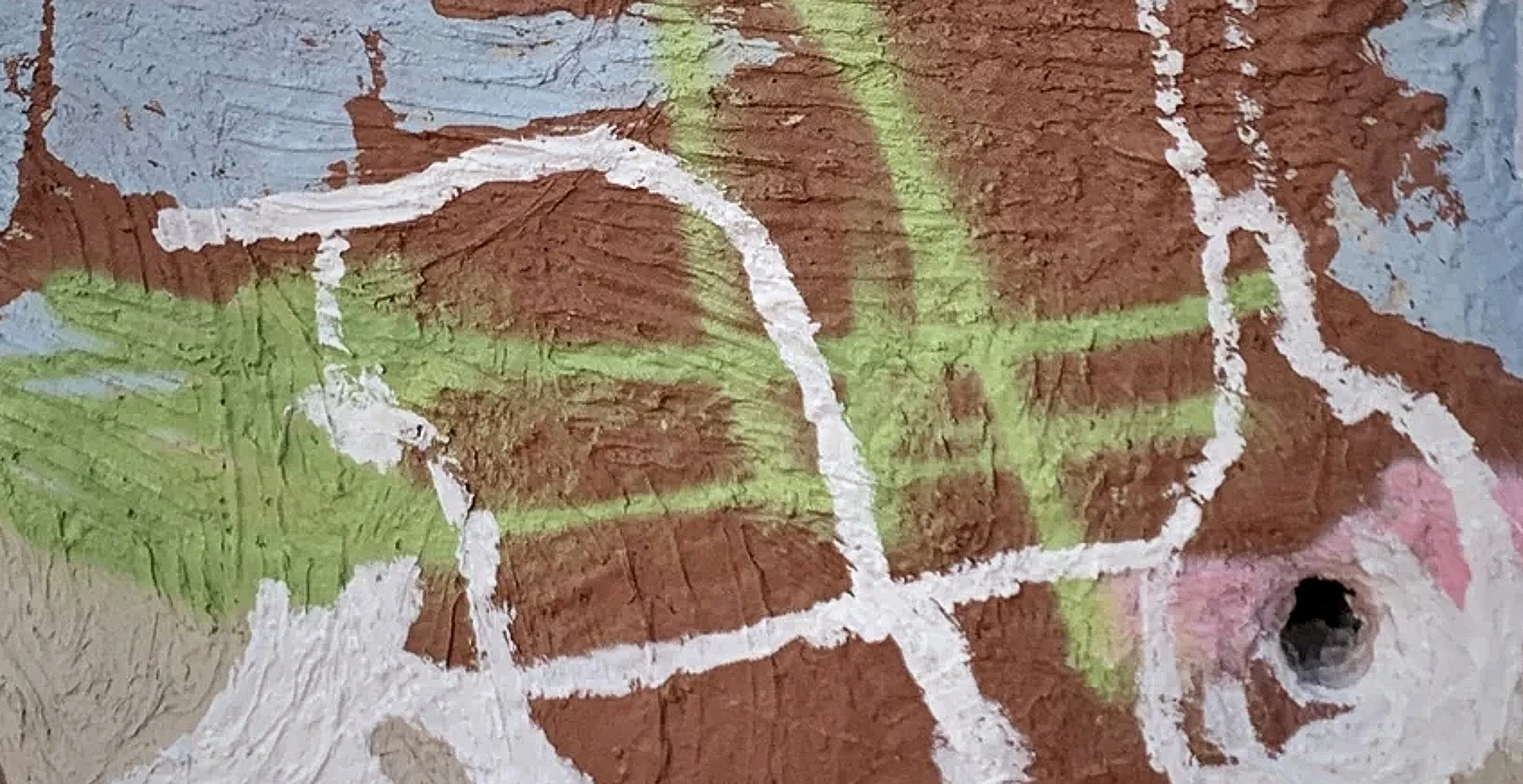
The object earns its place through beauty. It holds that place through something deeper.
The specific properties of art
Not every object makes an equally effective threshold. The properties that matter — according to both the research and the accumulated wisdom of the traditions that worked with liminal objects — are specific.
Aesthetic attention: The object must be worth looking at. This is not vanity. Aesthetic engagement — the activation of what Anjan Chatterjee calls the Aesthetic Triad, the simultaneous engagement of sensory response, meaning-making, and emotional reward — is itself a partial entry into the altered state. The beautiful object does not merely mark the threshold. It begins to open it at every encounter.
Perceptual openness: The object should not be fully decodable. A photograph of a person you love is a potent memory cue — but it is a cue for a specific memory, with a specific person, at a specific time. It is not a threshold to a state. An abstract object, carrying no fixed narrative, holds the space open for the state rather than redirecting attention toward a story.
Physical presence: The object must be physically real — not a screen image, not a reproduction without material weight. The motor cortex’s partial simulation of touching a textured surface is part of the encoding; the felt sense of the object in the world is part of what makes it a world-object rather than a representation of one. Cybele Rowe’s work originates in sculpture. Even in the card format, even in reproduction, that physical origin is present in the surface — the implied weight, the texture, the sense that hands made this.
Permanence: The object must stay. It must live in the space rather than being put away. Its persistent presence is not incidental to its function — it is the function. The brief glances, the peripheral awareness, the morning and evening encounters that require no decision — these are what the traditions meant by keeping the altar. Not occasional ceremony. Continuous, low-level reinstatement.
What this means for how you use the cards
The research and the tradition arrive at the same practical conclusion: the card that is put away in a drawer after the activation is not the same as the card that lives on the desk, the shelf, the wall. The object that is only encountered during formal practice is not the same as the object that is always already there.
This is why the physical format matters. Not for nostalgia, not against digital alternatives, but for a specific neurological and phenomenological reason: the threshold object must be in your life, not retrieved for your life. The practice it enables is not a retreat from the day. It is a continuous, quiet presence within it.
The card is not a reminder to do the practice. It is the practice — or at least the part of it that never stops.
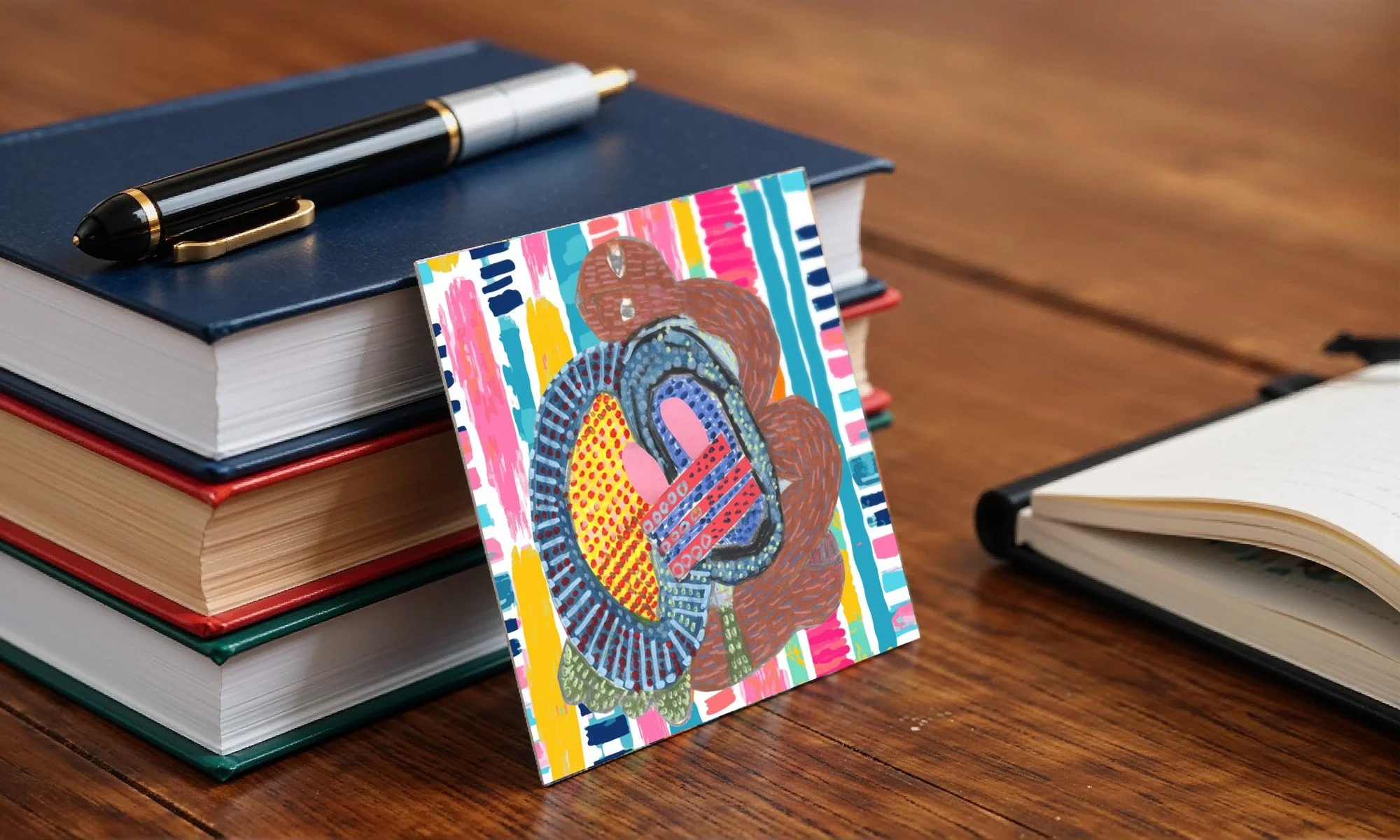
The practice it enables is not a retreat from the day. It is a quiet presence within it
The Science page on our site covers the foundations of the Everyday Activation Cards methodology. This post goes deeper on the psychology and anthropology of objects as thresholds — and what neuroscience confirms about why that ancient instinct is correct
Everyday Activation Cards is a collaboration between artist Cybele Rowe and consciousness practitioner Rebekah Vandenberg.
Three decks. Forty-five activations. Learn more →