Neuroscience & Consciousness · Everyday Activation Cards
What a voice can do to a nervous system
We tend to think of a guided audio as content — something to listen to, like a podcast or a playlist. Neuroscience suggests it is something closer to a surgical instrument. The voice, used with precision, acts directly on the body's oldest regulatory system.

The body has been listening to voices for longer than it has been reading words
Somewhere between 80,000 and 100,000 years ago, the human nervous system began doing something it had never quite done before: responding to the emotional content of another person's voice as a direct signal about the state of the world. Not just the words. Not just the volume. The quality — the rhythm, the pitch, the breath behind it — became information the body used to calibrate its own internal state.
A slow, low, unhurried voice told the nervous system: the environment is safe. A sharp, high, broken voice told it the opposite. This system is ancient, largely unconscious, and — here is the part that matters — still fully operational in every person who has ever felt inexplicably calm in the presence of the right voice, or inexplicably tense in the presence of the wrong one.
You have been responding to voices this way your entire life. The question is whether the voices you encounter are using that channel deliberately.
The nerve that connects everything
The mechanism behind this is the vagus nerve — the longest cranial nerve in the body, running from the brainstem down through the throat, heart, lungs, and gut. It is the primary pathway of the parasympathetic nervous system: the system responsible for moving the body out of stress activation and into the state of calm, regulated alertness that researchers call rest-and-digest.
What makes the vagus nerve unusual is how it can be accessed from the outside. Unlike most of the autonomic nervous system — which operates entirely beneath conscious reach — the vagus nerve has two branches, and the newer of them, the ventral vagal branch, is directly connected to the muscles of the face, throat, and middle ear. It is, in the language of neuroscientist Stephen Porges, the social engagement system: the pathway through which the nervous system reads safety signals from other human beings.
POLYVAGAL THEORY — Stephen Porges, 1994
Porges's foundational insight was that the evolved human nervous system doesn't just register threat and safety as a binary. It has a finely tuned social engagement system that constantly scans the environment — and specifically other people — for cues of safety, using vocal prosody as one of its primary inputs.
The frequency range the ventral vagal system is most sensitive to corresponds almost precisely to the frequency range of a calm human voice. This is not metaphor. The inner ear is literally tuned to receive safety signals from the voices of other humans — and when it receives them, the vagus nerve responds directly, slowing the heart, deepening the breath, and shifting the entire autonomic system toward parasympathetic regulation.
In practical terms: a voice with the right qualities — the right rhythm, pitch, and resonance — acts as a direct input to the body's calming system. Not by persuading the mind. By speaking directly to the nervous system beneath it.
What those qualities actually are
This is where vocal training becomes something more than a performance skill. The qualities that activate the ventral vagal pathway are specific and learnable — but they require practice, embodiment, and an understanding of what is actually being communicated beyond the words.
PROSODY
The melodic contour of speech — the rises and falls in pitch that carry emotional meaning. A voice with natural, unhurried prosodic variation signals presence and safety. A flat, monotone voice, paradoxically, can trigger mild threat responses even when the words are reassuring.
RHYTHM
Slow, consistent rhythmic pacing — particularly when it mirrors the pace of a regulated breath — entrains the listener's own nervous system toward that rhythm. This is not metaphor; respiratory entrainment is measurable and well-documented. The pace of the voice becomes, gradually, the pace of the body.
RESONANCE
A voice with depth and chest resonance — what is sometimes described as groundedness — activates the middle-ear muscles differently from a thin or high-placed voice. The body registers the physical presence behind the sound, and reads it as a signal of solidity and calm.
BREATH
The audible quality of breath within speech — the slight pause before a phrase, the easy exhale at a sentence's end — communicates the speaker's own nervous system state directly. A voice that breathes signals, below the level of language, that there is time. That the emergency is over.
These are not tricks. They are the acoustic signature of a regulated nervous system — and the listener's nervous system reads them as such, automatically, without instruction.
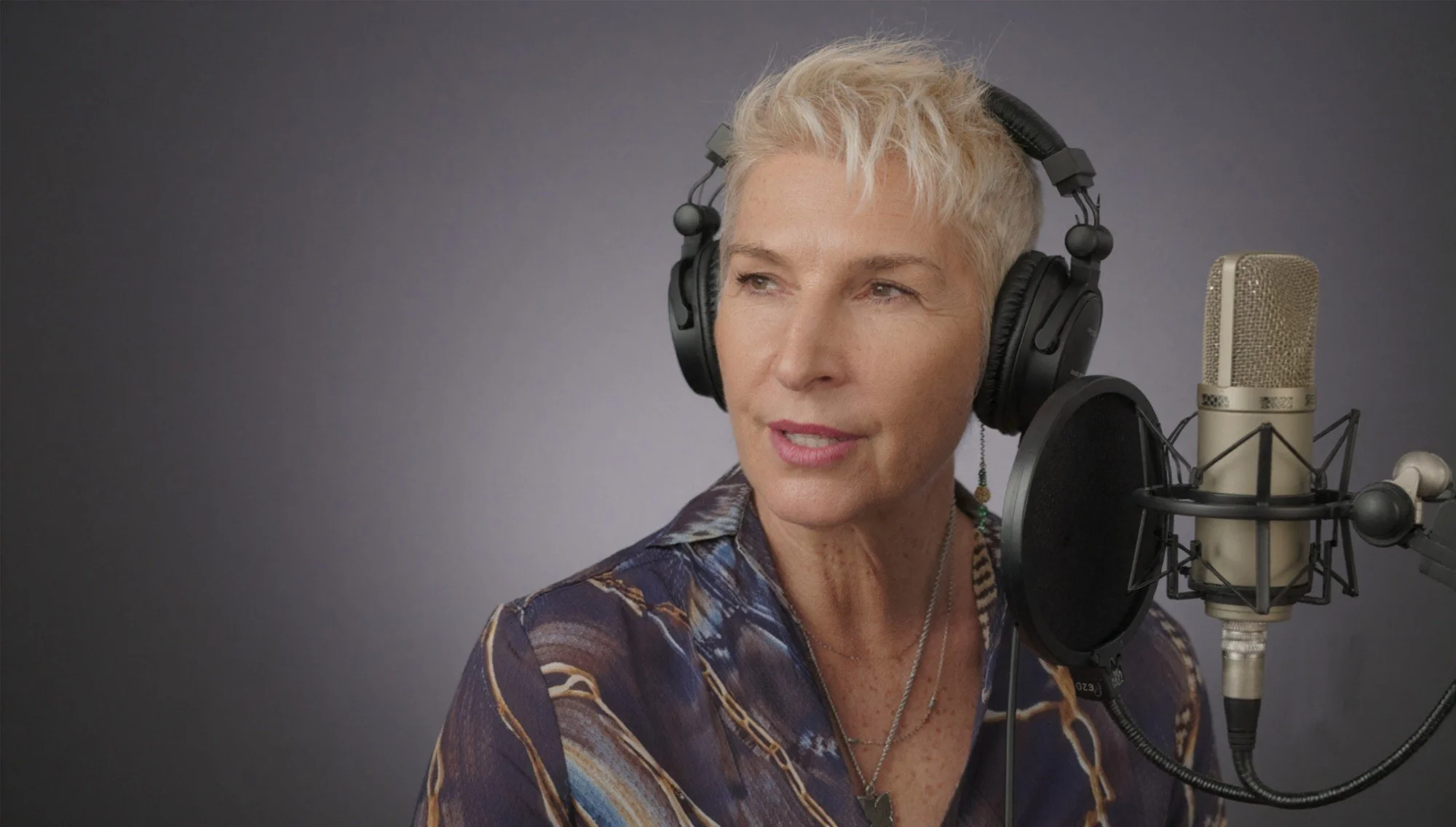
Rebekah Vandenberg is a voice practitioner and the creator of Deep Trance Technology™.
Precision, not volume
There is a common misunderstanding about what makes a guided audio activation different from, say, a relaxation playlist or a meditation app. The difference is not the content of what is said. It is the precision with which the voice is used as an instrument.
A skilled practitioner is not simply narrating a relaxation script. They are using the acoustic properties of their voice — its rhythm, its resonance, its breath — to directly modulate the listener's autonomic state. Simultaneously, the specific language being used is working at the level of the limbic system and the prefrontal cortex: directing attention, creating internal imagery, and building the associative pathways that allow a state to be re-accessed later.
"The voice is doing two things at once: taking the body somewhere, and teaching it how to return.”
This is why the same words, read by different voices, produce different physiological effects. The words are the surface. The voice is the mechanism. And this is also why a generic text-to-speech audio — however carefully written — cannot replicate what a trained human voice achieves. The nervous system is not reading the transcript. It is reading the person.
The window that opens
When the vagus nerve is activated and the autonomic system shifts into parasympathetic regulation, something opens in the brain that is otherwise difficult to access.
Neuroplasticity researchers describe a concept called a critical window: a period of heightened neural flexibility during which new associations, new patterns, and new cognitive-emotional connections can form with unusual ease. During ordinary waking life, these windows are relatively narrow — the brain's consolidation processes keep existing patterns stable. During deep relaxation, they widen considerably.
ORDINARY WAKING STATE
Existing neural patterns are stable and resistant to change. New associations form slowly, requiring repetition. The prefrontal cortex evaluates and often dismisses input that conflicts with established beliefs.
VAGALLY REGULATED STATE
Neural flexibility increases. New associations form more readily and with less repetition. The evaluative function of the prefrontal cortex relaxes, allowing deeper processing of imagery, meaning, and directed intention.
This is the window that a skilled voice practitioner is working in. The autonomic downregulation produced by the voice creates the conditions; the directed language and imagery does the work that ordinary, surface-level instruction cannot reach.
It is also the window in which the visual anchor — the art — forms its deepest association with the state being induced. Which is why the combination of art and voice is not additive. It is multiplicative.
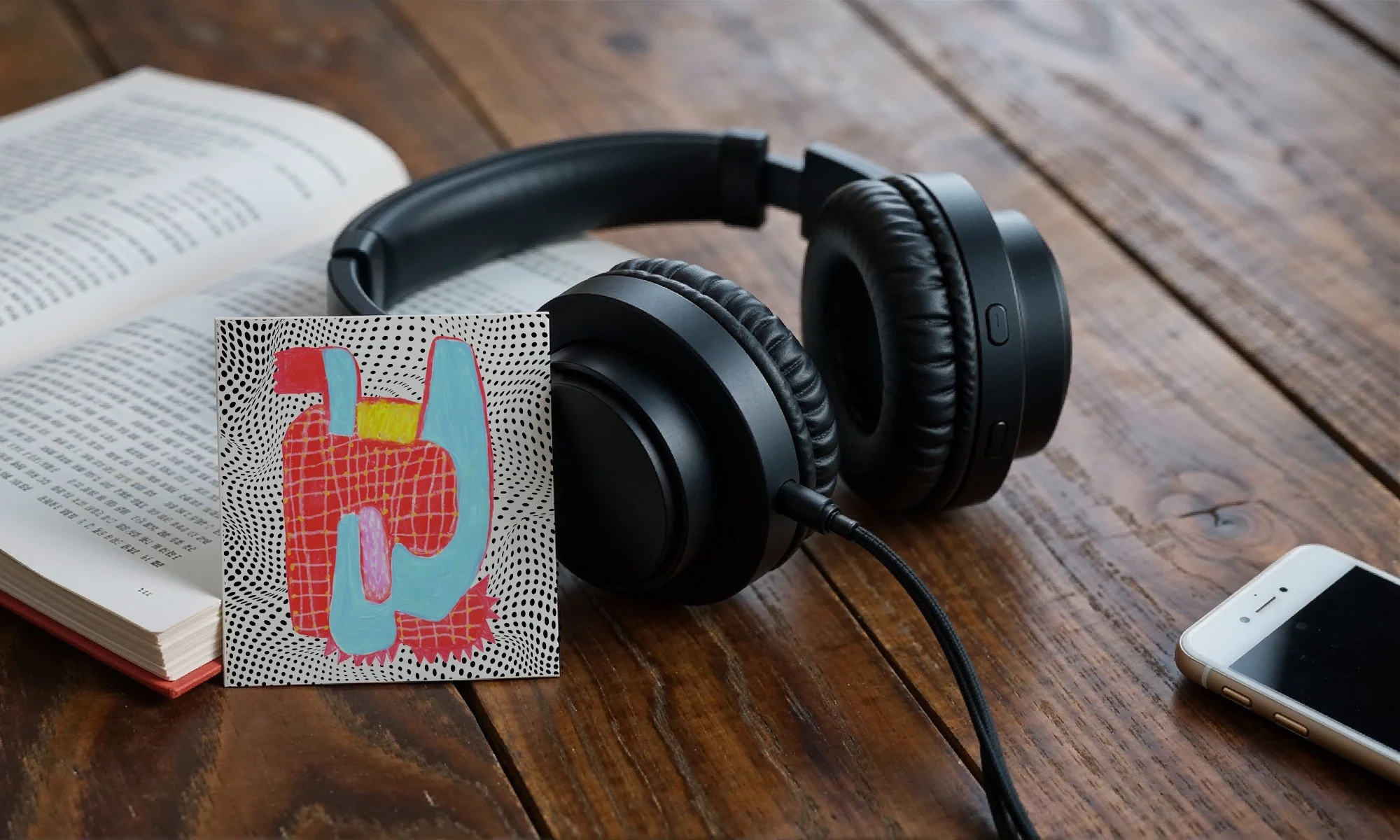
The art and the voice work on different systems simultaneously — and what they create together is greater than either alone.
The body has been listening to voices for longer than it has been reading words. Longer than it has been using language at all. That ancient listening system is still present, still active, still scanning every acoustic environment for signals of safety and connection.
When a trained voice speaks directly to it — with precision, with practice, with full understanding of what is being communicated beneath the words — the response is not learned. It is remembered.

The response is not learned. It is remembered.
This is the third in a series exploring the neuroscience behind Everyday Activation Cards. Read Post 1: Why your brain prefers art it can't quite figure out → · Read Post 2: You've been chasing flow state wrong →
Everyday Activation Cards are a collaboration between artist Cybele Rowe and voice practitioner Rebekah Vandenberg— three decks of fifteen cards, each with original fine art and a QR code linking to a guided audio activation.. Learn more →